
Private Placement M&A in Telecommunications & Data Centers: When Capital, Not Demand, Sets the Network Boundary
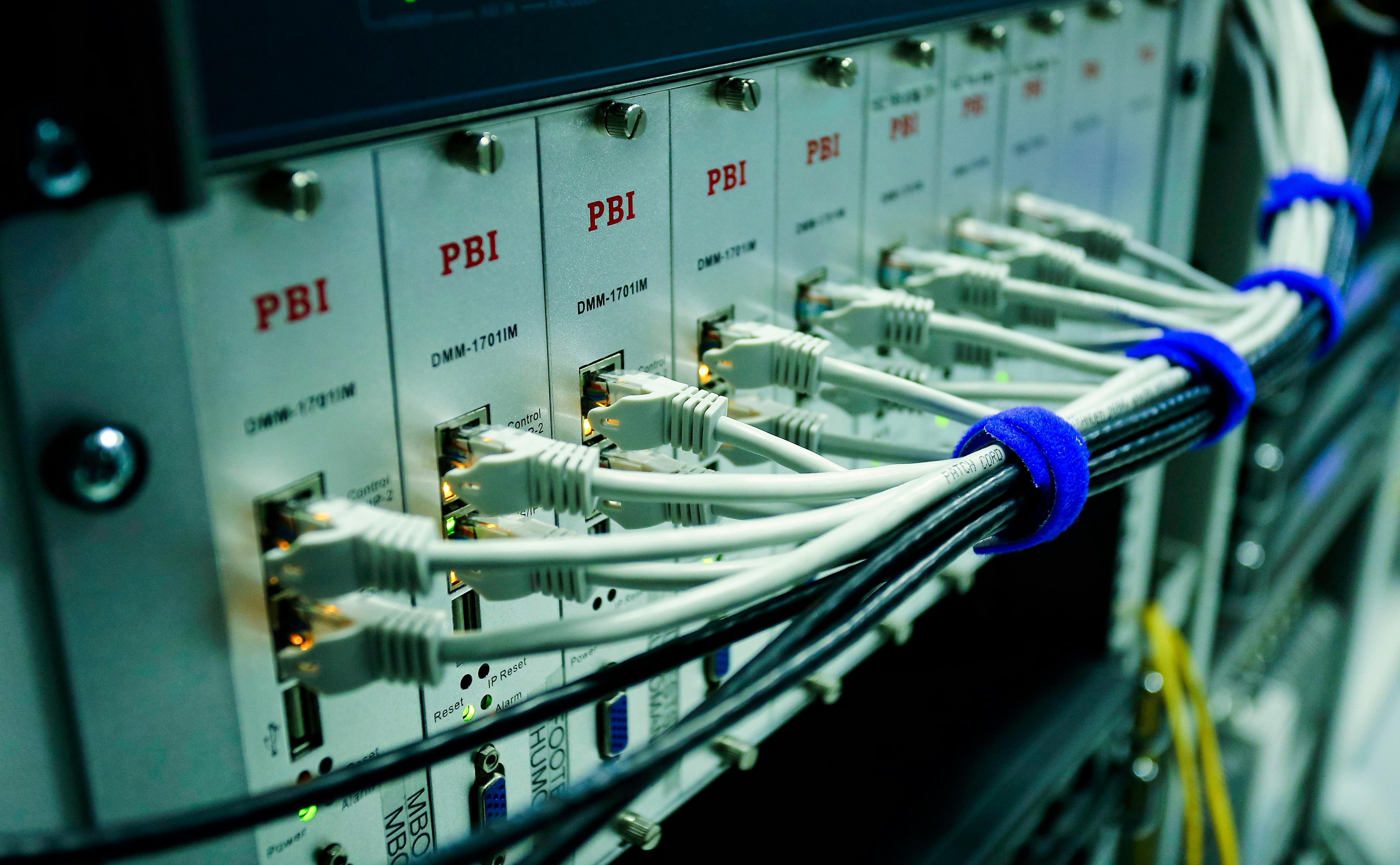
In 2024–2025, telecommunications and data center platforms sit at the center of global economic activity. Network traffic continues to compound, AI-driven compute demand is reshaping density requirements, and hyperscale customers remain structurally committed to outsourced infrastructure. From an operating perspective, demand durability is not in question. From a capital markets perspective, however, the tolerance for how that demand is funded has narrowed materially.
Public equity markets have not retreated from digital infrastructure because they doubt its relevance. They have retreated because they are unwilling to underwrite open-ended capital programs whose returns depend on power availability, grid upgrades, permitting timelines, and customer concentration that can shift faster than capital structures can adjust. Debt markets remain available, but leverage tolerance has tightened around exactly the risks that define the sector’s next phase of growth. In this environment, private placements have become the marginal equity solution. They do not simply provide funding. They impose a view on how risk should be carried across the network.
Boards often frame private placements as pragmatic responses to capital scarcity or balance-sheet optimization. In practice, these transactions embed a strategic choice that is rarely articulated directly. The capital forces a decision between building ahead of demand with the attendant timing and utilization risk, or prioritizing balance-sheet resilience by constraining expansion to what can be fully underwritten today. Private placement capital in this cycle overwhelmingly favors the latter. Investors are not paying for optionality around future network effects. They are paying to limit variance around power procurement, construction execution, and customer credit exposure. Once that preference is embedded in governance, the operating model begins to change even if demand signals remain strong.
The consequences emerge quickly because infrastructure decisions are inherently irreversible. Capex sequencing becomes more conservative as greenfield builds and new market entry face higher internal hurdles unless anchored by contracted demand. Customer strategy tightens around a smaller number of long-duration counterparties that provide revenue visibility but increase concentration risk over time. Technology choices increasingly favor proven architectures with predictable returns, while higher-density or next-generation solutions struggle to secure approval absent full de-risking. Individually, these decisions appear disciplined. Collectively, they reshape the network footprint into one that is easier to finance and forecast, but less responsive to shifts in geography, technology, or pricing power.
Boards often assume private placements are temporary bridges back to public equity or strategic exits. In digital infrastructure, that assumption frequently proves optimistic. Public investors reassess platforms post-placement through a different lens. They evaluate whether expansion optionality has been structurally constrained, whether returns are now optimized for contracted yield rather than scalable network economics, and whether governance complexity limits rapid response to changes in AI-driven demand. When the answers point toward a capital-managed infrastructure owner rather than a growth-oriented network builder, valuation frameworks adjust accordingly. Multiples may stabilize, but premiums associated with scalability and optionality are slow to return. The platform performs reliably, but within a narrower strategic envelope.
The most common board-level miscalculation is assuming that demand inevitability compensates for reduced flexibility. In telecommunications and data centers, demand is durable, but where and how that demand materializes evolves quickly. Power economics shift, regulatory regimes change, and customer requirements reprice density and latency in ways that reward early positioning. Platforms that cannot move decisively because capital governance prioritizes downside protection risk being locked into mature footprints just as new opportunities emerge.
Private placements can be the correct strategic choice when that outcome is intentional. They work when balance-sheet durability and credit access are paramount, when power and permitting constraints demand conservative sequencing, and when management is explicitly prioritizing contracted returns over speculative scale. In those cases, private capital reinforces a strategy already converging toward predictability and endurance. They fail when used to quietly preserve growth models that still depend on early market entry, geographic optionality, and technology leadership, attributes that private governance is designed to restrain.
The uncomfortable question boards often avoid is straightforward. Are we building a network, or are we managing one. Private placements force an answer. Once capital aligns around yield stability and variance reduction, reversing that orientation is difficult even when demand accelerates faster than expected.
Private placements in telecommunications and data centers are therefore not neutral financing tools. They define the network boundary by determining where capacity will be built, how quickly it will expand, and how much risk the platform is permitted to tolerate. For boards and sponsors in 2025, the strategic question is not whether private capital strengthens the balance sheet. It almost always does. The question is whether the certainty it provides is worth the strategic paths it quietly forecloses. When the trade is deliberate, private placements can stabilize platforms and protect enterprise value through volatile investment cycles. When it is reactive, companies often discover that while funding risk was reduced, the freedom to shape the next generation of digital infrastructure was quietly surrendered.





Explore The Post Oak Group
From initial strategy to successful closing, The Post Oak Group delivers disciplined execution and senior-level guidance across both M&A and capital markets transactions.